8 min read
Why winning more RFQs isn't enough for automotive suppliers
 Campfire Editorial Team
October 31, 2026
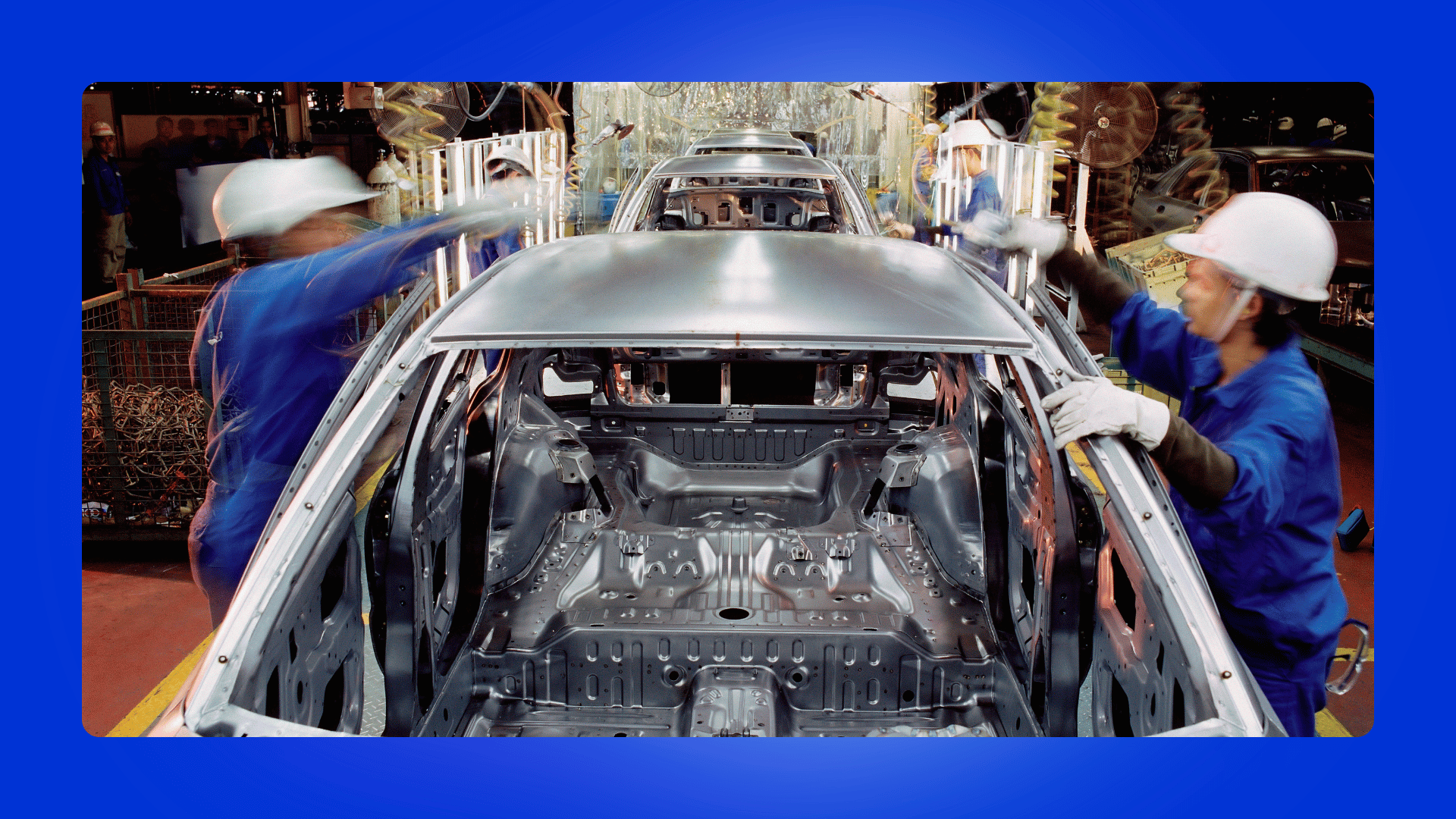
The Supplier Signal is the show where the people driving the automotive supply industry share what's really on their minds: straight analysis and a grounded market outlook from operators living it, not narrating from the sidelines. In this third episode, host Todd Yaquinto sits down with Jason Versical, VP of Sales Strategy and Transformation at Campfire Interactive.
Listen now: YouTube · All platforms
Episode summary
In this episode of The Supplier Signal, host Todd Yaquinto talks with Jason Versical, VP of Sales Strategy and Transformation at Campfire, about how automotive suppliers can drive enterprise value from the commercial side of the business. Jason's career has been connected to the automotive industry for more than 15 years, from roles at tier one and tier two suppliers to management consulting, where he advised Fortune 500 industrial and automotive companies on corporate strategy and business transformation. He explains why this is such a demanding moment for suppliers: the number of unique vehicle nameplates sold each year has roughly doubled over the past 20 years, while total annual vehicle sales have stayed around 16 million. More variation, more work, and a market that isn't growing.
Key takeaways
-
The market isn't growing, but the work is. Jason estimates unique vehicle nameplates have roughly doubled over 20 years while annual sales have held near 16 million, so suppliers take on more work without more revenue.
-
Enterprise value now runs through the commercial team. With more private equity and shareholder pressure, top-line growth alone isn't enough. Value comes from the right customers and the most profitable program mix.
-
Winning RFQs isn't the same as gaining ground. If the OEMs you serve are losing share, you can win the same business you always have and still shrink.
-
The risk hides between systems. Multi-year development and production cycles mean shifts rarely show up in the P&L or ERP until long after the business is awarded.
-
Capacity is a math problem. Every quote should be weighed against existing programs, EDI forecasts, and available capacity to decide where to produce and how aggressively to price.
-
The most business isn't the most profitable business. The winners treat quoting as a lever for enterprise value, work from real-time data, and use technology to respond to the market faster.
From tier one suppliers to management consulting: Jason's path in automotive
Todd: Give listeners a quick sense of who you are and what you've done throughout your career.
Jason Versical: In my current role, I support large automotive tier one and tier two suppliers through their digital transformation journeys. My career has been connected to the automotive industry for more than 15 years. I've worked at large tier one and tier two suppliers, and before Campfire I worked at a leading management consulting firm, advising Fortune 500 industrial and automotive companies on corporate strategy, business transformation, and digital transformation. Today I spend most of my time with C-suite leaders at tier one and tier two suppliers of all sizes that support the OEM customer base.
Why is this such a demanding moment for automotive suppliers?
Todd: Was there something that drew you to the automotive industry specifically?
Jason Versical: It's a very interesting time to be connected to the market. We're seeing more change and variation in the industry than ever before. About 20 years ago, there were maybe 200 unique nameplates or models sold in a calendar year. Today there are more than 400. That's double the variation, yet the total market, at roughly 16 million vehicles sold per year, hasn't grown much. There's more variation and more change, but the pie isn't necessarily growing. That's made it a very competitive, difficult space, but one where automotive suppliers with strong operations can succeed and do very well.
How does a commercial team drive enterprise value?
Todd: You mentioned driving enterprise value from a commercial team perspective. Can you set that up for us?
Jason Versical: There's more private equity investment and more shareholder pressure on automotive suppliers and manufacturing companies in North America than there has been in the past. It's no longer enough to just grow revenue, grow the top line, keep doing the work, and follow the industry's tailwinds. The commercial team now drives enterprise value in two places: growing with the right customers, and optimizing the products coming into the plants so engineering and production capacity is filled with the most profitable program mix.
Who are the right customers for automotive suppliers?
Todd: Start with the first one. Who are the right customers?
Jason Versical: Many leading suppliers have comfortable OEM relationships they've had for decades: 20, 30 years or more. For a long time in North America, following those customers was a very successful way to grow your share of the pie. But over the last five to 10 years, we've seen increasing disruption. At one point, over 90% of the automotive market belonged to US-headquartered OEMs; today the Detroit Three hold less than 40%. So the customers you've been tied to for a long time may or may not be the ones winning share over the next five, 10, or 15 years, and the question is how well you're responding. Over the past decade, Hyundai and Kia have grown their vehicle volume by more than 25%. Toyota has continued steady, healthy growth. Stellantis is down about 40% from its peak vehicle sales, and Nissan is down about 40% as well. Through no fault of their own, suppliers executing on those relationships and winning their fair share are feeling this in a lot of different ways. Add the vehicle mix and the additional models, and suppliers are taking on more work without necessarily driving more top-line revenue.
Why can suppliers win RFQs and still lose ground?
Todd: You said you can win the same RFQs you've always won, execute better than five years ago, and still lose ground because the customer you're winning with is shrinking. How does that show up?
Jason Versical: It often doesn't show up right away. Development cycles are two to three years, and the industry is trying to move faster; we see other parts of the world where that's accelerated. Production life cycles run five to six years or more after that. So you don't necessarily see it in your P&L today. Those trends are already taking place, and that business has already been awarded. There's pretty good data out there showing what the next one or two years, or a four-to-five-year long-range plan, will bring. But it's not showing up in your ERP software, which is very day-to-day and transactional, based on what's happening on the manufacturing floor today. In some cases it shows up in spreadsheets in different areas of the business, but it's often not consolidated at the corporate level. The information is out there to help suppliers adapt more quickly, if they can bring it together.
How do you fill capacity with the most profitable programs?
Todd: On profitability, how do you focus on filling capacity with the most profitable programs?
Jason Versical: In a way, it's a big math equation. You have your programs on the manufacturing floor, and each one has a start date, an end date, a certain number of parts, take rates, and complexity. Those are based on assumptions. We know pretty well what we'll produce today, and two weeks out, maybe four to six months out, based on the EDI forecasts we get from customers with some adjustments. Merging into that is your opportunity pipeline: the vehicles, opportunities, and programs you're working on to replace that business in the future. The start and end dates are forecasts, of course. The key question any time a supplier submits an RFQ and bids on a program is: where will we produce this, with what equipment, at which facilities, and do we have the capacity? We want to use our capacity as fully as we can, and with higher-margin, higher-profit programs. Often, the connection between what we're quoting today and what's happening on the manufacturing floor in the ERP system tells you whether you're balancing it well. Are we going after the right programs, with the right aggressiveness in our pricing and cost models, to fill plant capacity, use our capital equipment well, and drive the highest revenue and profit margin on our capital investments?
Who feels the pressure most inside a supplier?
Todd: Who feels that pain the most within the organization?
Jason Versical: It's felt across the organization. Team members are asked to deliver more work with the same or fewer resources, hitting milestones, deliveries, timing, and commercial targets on more programs and more variations. You see it on the manufacturing floor and in the plants as changeovers increase. You see it in engineering and development teams facing faster deployment timelines and targets. And you certainly see it in the C-suite, with shareholder, investor, and ownership pressure on the CEO, CFO, head of sales, and head of operations. It cascades through the organization and creates a stressful environment for suppliers trying to hit commercial targets in a market that's getting more difficult and more competitive.
Where does AI fit for automotive suppliers?
Todd: We could spend an entire session on AI, but briefly, where do you see it fitting in?
Jason Versical: AI has a fantastic use case for this problem. Think about data in separate sources: some structured, some unstructured, some internal, some external. We have history with our customers, so we know their likelihood of achieving the targets they set for us. Some OEMs are much better at achieving their projections than others, who have a history of overstating or understating them for various reasons. We're also seeing more market data, like a supplier force majeure event, a UAW or employee strike, or a shipping or logistics bottleneck at a port city. Tariffs and everything else create external factors that often don't get pulled into the internal decision-making that supplier leadership teams rely on. For commercial management, there's the information the sales team receives through email and customer conversations, what the plant receives through ERP and EDI transmissions on daily shipments and short-term forecasts, plus commercial execution and external data. There are a lot of key insights there that can help suppliers be more responsive and make better decisions that ultimately drive profitability and growth.
What's the one thing suppliers should take away?
Todd: If you leave our listeners with just one thing, what would it be?
Jason Versical: It's not going to be the supplier who wins the most business that's the most profitable. We've seen it with Campfire customers. The ones treating quotation and new RFQ opportunities as a lever for enterprise value creation, working with more real-time data, able to respond rapidly to the market, and using technology for a competitive advantage are the ones that will succeed over the next five to 10 years. We see no reduction in the complexity of automotive vehicles. Vehicle architecture is getting simpler in some ways with EVs, but powertrains are changing, the OEMs gaining share are changing, and global geopolitical and economic factors are shifting, with regions like China deploying very high-quality vehicles very quickly and a lot of OEMs trying to take share. There's going to be more change, and the suppliers that meet it with real-time data and the systems and technology to drive enterprise value are the ones that will succeed.
Frequently asked questions
Q: Why isn't winning more business enough for automotive suppliers?
A: Because volume doesn't guarantee profit. Vehicle variety has grown much faster than the overall market, so suppliers take on more work without more revenue. The most profitable suppliers focus on the right customers and fill capacity with higher-margin programs.
Q: How do automotive suppliers create enterprise value?
A: Increasingly through the commercial team: growing with the customers that are gaining share, and filling engineering and production capacity with the most profitable program mix, rather than chasing top-line revenue alone.
Q: How are OEM market share shifts affecting automotive suppliers?
A: Suppliers tied to OEMs that are losing share can win the same RFQs and still shrink. Because development and production cycles span years, the impact often doesn't appear in the P&L or ERP until long after the business is awarded.
Q: How should suppliers decide which programs to quote?
A: By weighing each opportunity against existing programs, customer EDI forecasts, and available capacity: where it would be produced, on what equipment, and whether it improves margin. Pricing aggressiveness should reflect how profitably the program fills capacity.
Q: How can AI help automotive supplier commercial teams?
A: By combining internal data, such as each OEM's track record on volume projections, with external signals like strikes, port bottlenecks, and tariffs, AI can surface insights that help suppliers respond faster and make more profitable decisions.
Run a supplier, carry a number, or answer for what happens next quarter and next decade? The Supplier Signal is for you. Follow the show wherever you listen, and dig into more at campfire-interactive.com/podcast.
Campfire Editorial Team
With over 12,000 users and two decades of proven impact, Campfire Interactive enables Tier 1 and Tier 2 automotive suppliers to win more profitable business, forecast more accurately, and execute programs without losing margin.
Connect on LinkedIn