How Tier-1 and Tier-2 Suppliers Can Future-Proof Margins in 2026

How Tier-1 and Tier-2 Suppliers Can Future-Proof Margins in 2026

The Margin Pressure Is Real

For Tier-1 and Tier-2 suppliers, profitability in 2026 won’t come easy. OEM demand remains unpredictable, input costs are volatile, and programs are getting more complex—especially as electrification, sustainability, and reshoring trends reshape the supply chain.

The challenge is clear: how can suppliers protect and grow margins when pricing power is limited and operational complexity keeps rising?

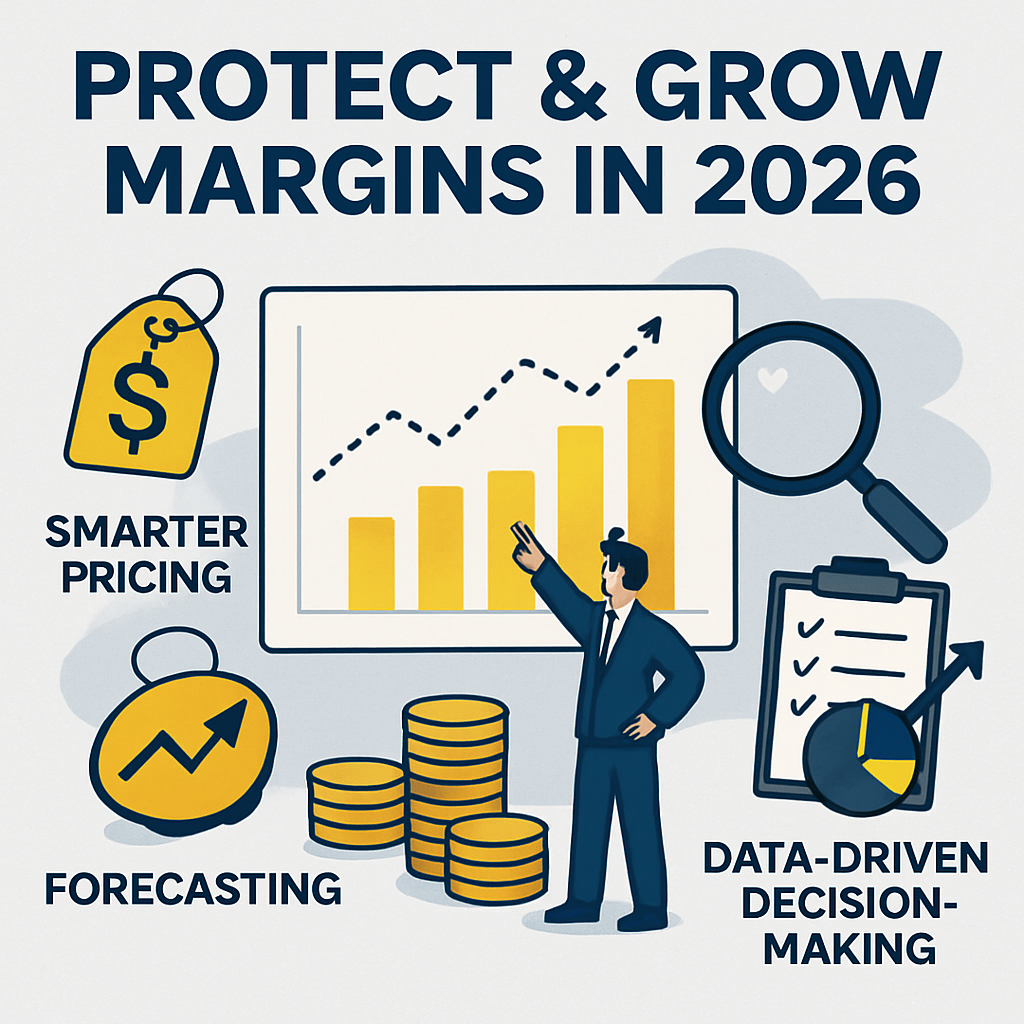
The answer lies in building a future-proof margin strategy—one that integrates forecasting accuracy, smarter pricing models, and real-time visibility into cost and demand drivers across the enterprise.

Understanding the Margin Squeeze

Margin erosion has been the quiet killer for many suppliers over the last decade. On one side, OEMs are pushing for aggressive cost reductions, often locking suppliers into long-term programs with little room for inflation or raw-material adjustments. On the other, Tier-2 suppliers are struggling to meet compressed lead times and narrow profit bands, passing volatility up the chain.

Three key forces will continue to pressure profitability in 2026:

  1. Demand volatility – OEM forecasts fluctuate with EV adoption rates, consumer confidence, and regional policy incentives.

  2. Material cost swings – Aluminum, steel, and resin pricing remain unstable, often changing faster than contracts can be renegotiated.

  3. Complex RFQ environments – Programs now require multi-scenario quoting that factors in tariffs, logistics, and sustainability compliance.

These dynamics demand more than spreadsheets and instinct. They require connected data, predictive intelligence, and a unified profitability view across the business.

Future-Proofing Margins Starts with Forecasting Precision

For many suppliers, forecasting is still an art form—dependent on outdated models and siloed spreadsheets. But in 2026, forecasting accuracy will define competitiveness.

Modern Tier-1 and Tier-2 suppliers are adopting AI-driven forecasting systems that integrate historical program data, OEM schedules, commodity indices, and market trends to predict future demand and cost impacts with greater precision.

This enables teams to:

  • Anticipate OEM demand fluctuations before they affect capacity planning.

  • Model “what-if” scenarios for raw-material spikes or exchange-rate shifts.

  • Align sales, program management, and finance around a single source of truth.

The result? More predictable revenue streams, smarter quoting, and fewer last-minute surprises that eat into margins.

Smarter Pricing: Protect Every Margin Point

As competition tightens, pricing discipline becomes a strategic weapon. Suppliers that win the right business—not just the most business—will lead the margin race.

To future-proof pricing in 2026:

  1. Centralize Quotation Management – Replace manual RFQ workflows with digital systems that consolidate cost models, version control, and approvals. This ensures every quote reflects current material indexes, labor rates, and profit targets.

  2. Embed Real-Time Cost Data – Integrate cost curves and commodity feeds directly into your quoting logic to eliminate guesswork.

  3. Use Margin Guardrails – Set minimum acceptable margins by product line, customer, or region to prevent margin leakage during negotiations.

By combining automation and intelligence, suppliers can respond faster to RFQs while maintaining consistent profit protection—turning quoting speed into a competitive advantage instead of a liability.

Data-Driven Decision-Making for 2026 and Beyond

Tier-1 and Tier-2 suppliers already collect mountains of data—from ERP systems, PLM tools, and customer portals—but most struggle to translate that data into profitability insights.

The leading suppliers are leveraging Profit Optimization Platforms that connect the dots between programs, quotes, and forecasts. These systems surface margin risks early and empower leaders to take corrective action before profitability slips away.

Key capabilities to look for include:

  • Margin visibility dashboards across all customers and programs.

  • Scenario modeling tools for supply disruptions or cost changes.

  • Automated alerts for margin erosion, cost overruns, or demand deviations.

  • Role-based insights so finance, sales, and operations align around common KPIs.

The goal is to move from reactive reporting to proactive margin management—where every decision is backed by data and every leader has clarity on where profit is made or lost.

Tier-1 vs. Tier-2: Different Roles, Shared Pressures

While Tier-1 suppliers manage direct OEM relationships and program execution, Tier-2 suppliers often operate one step removed—but their profitability challenges mirror each other.

  • Tier-1 suppliers face constant OEM pricing pressure and long-cycle forecasting uncertainty. Their success depends on precise cost modeling and strategic sourcing.

  • Tier-2 suppliers face margin compression as they absorb volatility from both upstream and downstream partners. They need transparency and agility to adjust pricing in real time.

Both tiers can benefit from integrated profitability management platforms that synchronize demand forecasts, cost data, and pricing strategies across the value chain. The more connected the tiers become, the stronger their collective resilience to market swings.

Building a Culture of Profitability

Technology alone won’t future-proof margins. It takes organizational alignment and accountability.

CFOs, COOs, and commercial leaders must create a culture where:

  • Profitability is measured at every stage—from forecast to quote to delivery.

  • Data flows freely between departments, eliminating silos.

  • Teams are empowered with insights, not buried in spreadsheets.

When profitability becomes everyone’s responsibility, it transforms from a finance metric into a competitive advantage.

The Road Ahead: From Reactive to Predictive

By 2026, the suppliers who thrive won’t be those who simply cut costs or chase volume. They’ll be the ones who master predictive, data-driven margin management.

Future-proofing margins means:

  • Embedding forecasting intelligence to anticipate demand changes.

  • Automating quoting processes with built-in profit protection.

  • Aligning every function around a unified profitability operating system.

The era of manual spreadsheets and reactive decision-making is ending. For Tier-1 and Tier-2 suppliers, 2026 is the year to move faster, price smarter, and protect every margin—no matter how volatile OEM demand becomes.

Related Posts