Finance can’t protect margin with spreadsheets and rearview reporting.
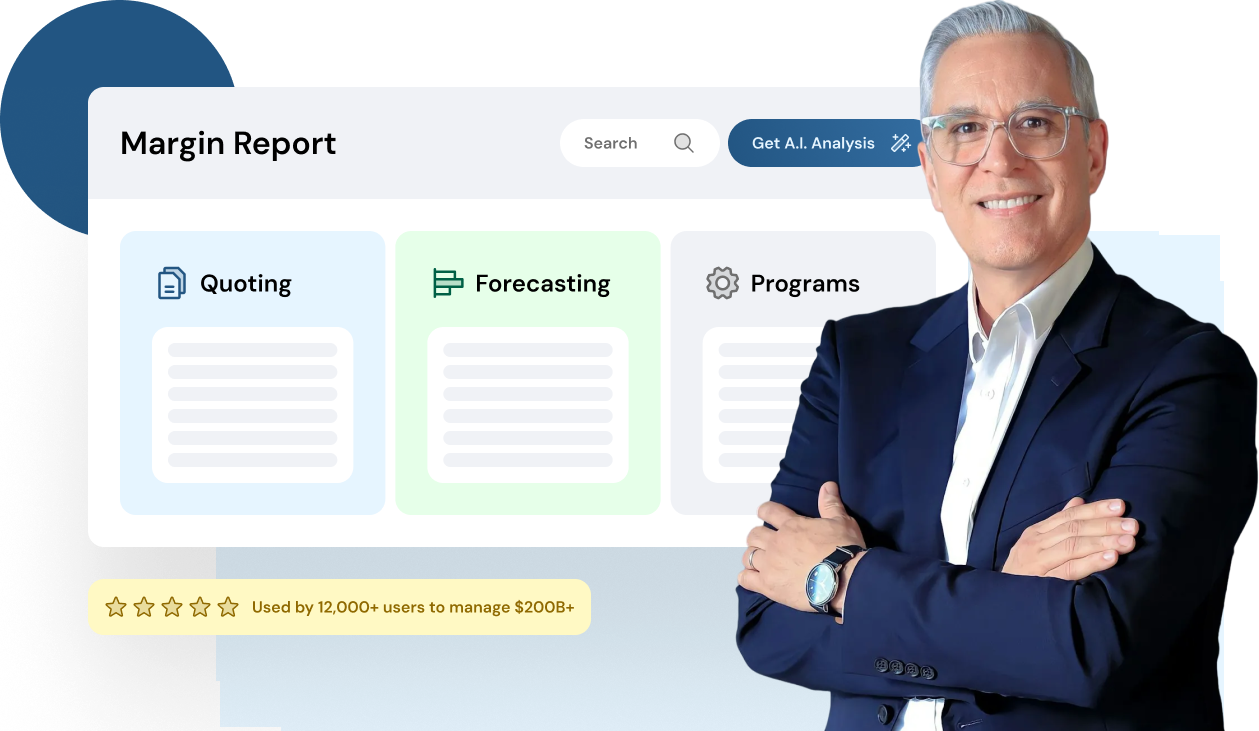
Campfire gives automotive supplier finance teams a real-time profitability layer across quoting, forecasting, and program execution—so you can catch margin drift early, recover costs faster, and forecast with confidence.
Campfire vs Spreadsheets for Forecasting & Margin Recovery
Campfire is built for manufacturing teams that need to manage forecast accuracy and margin recovery as execution changes, not after month-end close. Spreadsheets are flexible, but manual, fragile at scale, and rarely audit-ready.

TL;DR
-
Use spreadsheets for ad-hoc analysis and small, stable environments.
-
Use Campfire when you need execution-aware forecasting, early margin risk visibility, and audit-ready traceability across Finance, Sales, and Operations.
-
If your forecasts look fine but margins still slip during execution, spreadsheets are usually the bottleneck.
Quick answer.
Campfire is built for manufacturing teams that need to manage forecast accuracy and margin recovery as execution changes, not after month-end close. Spreadsheets are flexible, but manual, fragile at scale, and rarely audit-ready.
At a glance: Campfire vs Spreadsheets.
| Capability | Spreadsheets | Campfire |
|---|---|---|
|
Forecast updates
|
Manual, periodic
|
Early warning, in-period
|
|
Margin visibility
|
After-the-fact
|
Early warning, in-period
|
|
Assumption tracking
|
Hidden in cells
|
Explicit, structured
|
|
Scenario modeling
|
Fragile, version heavy
|
Built-in, repeatable
|
|
Cross-team alignment
|
Email & meetings
|
Shared system of record
|
|
Audit readiness
|
Low
|
High
|
|
Scalability
|
Breaks with complexity
|
Designed for multi-program ops
|
What spreadsheets are good for.
Spreadsheets remain useful for:
-
One-off analysis
-
Quick "what-if" modeling
-
Lightweight reporting in stable environment
Where spreadsheet-based forecasting breaks down.
-
Lagging visibility: issues show up after close, not early enough to act
-
Version sprawl: multiple forecasts and no single source of truth
-
Hidden assumptions: costs, recoveries, volumes buried in cells
-
Manual risk: outcomes depend on fragile updates and tribal knowledge
-
Track Low audit confidence: hard to explain what changed and why
How Campfire approaches forecasting differently.
Campfire replaces spreadsheet-driven forecasting with execution-aware profit intelligence. Instead of reconciling margin outcomes after the fact, Campfire is designed to:

Connect quote/forecast assumptions to execution reality
Surface margin drift early (before month-end)
Align Finance, Sales, and Operations to one shared view

Make forecast changes explainable and audit-ready
Use cases Campfire supports:
Identify margin drift before month-end close
Align Sales forecasts with Finance reality
Manage post-quote execution risk
Support cost recovery + re-quoting cycles
Pros & cons: an honest comparison.
Pros of spreadsheets:
-
Familiar and flexible
-
Low initial cost
-
Good for ad-hoc analysis
Cons of spreadsheets:
-
Manual + error-prone at scale
-
No real-time execution linkage
-
Version sprawl + weak governance
- Not audit-ready by default
Pros of Campfire:
-
Designed for manufacturing complexity
-
Early visibility into margin risk
-
Structured, auditable forecasting
- Cross-functional alignment by design
Considerations for Campfire:
-
Purpose-built (not generic BI)
-
Requires cross-team adoption for maximum impact
Decision guide: pick the right approach.
-
You need occasional modeling and reporting
-
Forecast inputs are stable and simple
-
Cross-functional alignment isn’t a major issue
-
Manual risk: outcomes depend on fragile updates and tribal knowledge
-
Track Low audit confidence: hard to explain what changed and why
-
Forecast accuracy is a board-level priority
-
Margin drift emerges during execution (not just at quote time)
-
You need audit-ready traceability of changes
-
Finance, Sales, and Ops need one "version of the truth"
Who Campfire is best for.
Tier 1 and Tier 2 automotive + industrial manufacturers
Finance leaders accountable for forecast accuracy and margin outcomes
Commercial teams managing long-cycle, high-variability programs
Organizations outgrowing spreadsheet-based forecasting
#faq
Frequently asked questions.
Is Campfire an FP&A tool?
Not in the traditional “corporate FP&A suite” sense. Campfire is designed specifically to connect forecast and margin accountability to execution reality in manufacturing environments.
Can we keep Excel and still use Campfire?
Yes. Many teams keep spreadsheets for ad-hoc modeling while shifting system-of-record forecasting and margin visibility into Campfire.
What’s the biggest difference between Campfire and spreadsheets?
Spreadsheets are flexible but manual and fragile at scale. Campfire is built to keep forecast, margin, and execution aligned with auditable change tracking.
How fast can a team see value?
Teams typically see value once they connect forecast assumptions to execution signals and standardize how margin risk is tracked and escalated.